Atta goes stale the moment it's milled.
Every other brand mills first and sells later — days, sometimes weeks later. In a factory, wheat is ground between high-speed steel rollers that run hot enough to cook off the very nutrients you bought it for. We don't mill until you order, and we grind on stone.
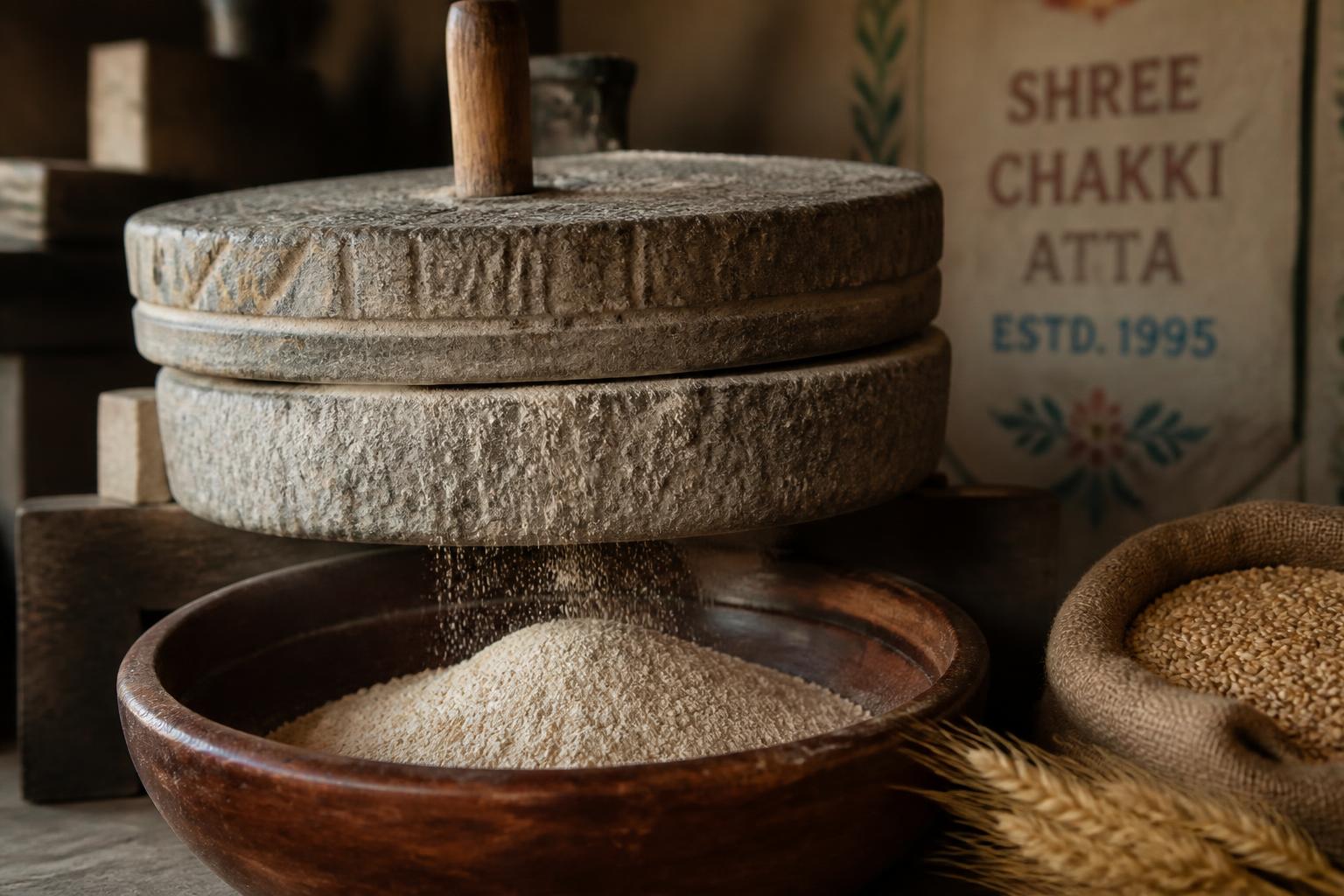
Your order lands
Nothing has been milled yet. The grain for your pack is still whole, sitting in the sack.
Grain is cleaned and weighed
Each blend is measured by hand to its recipe — the same percentages printed on the pack.
Stones do the work, slowly
A traditional chakki turns slowly and stays cool, so bran, germ and natural oils stay in the flour instead of burning off.
Sealed and dispatched the same day
No warehouse, no shelf, no preservatives. The milling date on your pack is the day it left us.
What heat actually costs you
Roller mills separate the grain and reintroduce part of it, running at temperatures that damage heat-sensitive vitamins and oxidise the germ's natural oils. That's why factory atta needs preservatives and why it tastes flat. Stone grinding keeps the grain whole and cool — and milling to order means oxidation never gets a head start.
See the six blends